Sunday, 24 August 2008

Slipping Through The Cracks: Part 2

Caution: do not enter the spoiler enclosure unprotected.

Yesterday I tried to give an overview of Midnight Nation and explain why I love it so much. Amongst other things I pointed out the fact that there is a lot going on under the surface of the book that bears closer scrutiny. Much of this will completely ruin the comic for anyone who hasn't read it yet, so if that's you; leave now.

Anyway...

I mentioned yesterday both that this series had a tendency to head off in unexpected directions and that it had heavy religious overtones. Both of these points are, of course, connected. We suspect that some kind of religious imagery is liable to be popping up from the moment David has his soul stolen by The Men. By the time we're introduced to Lazarus and his (quite literal) guardian angel, we are no longer in any doubt. David's struggle isn't just about reclaiming his soul, it's also a tiny slice of a much bigger battle.

This, it seems at first, is perhaps why Laurel is so cold and unsympathetic towards him. Having fought this particular battle so many times, and aware of how many other such conflicts are going on all around them, it is perhaps forgivable that she might find it hard to focus on David through the violence and the misery and the white noise. This isn't her first rodeo, and it's not like she and David are playing the only chess game in town.

In fact, the chess analogy is a good one, especially when the realisation dawns that this is a chess game from the pawn's perspective. David's frustration is borne from Laurel's expectation that he simply do what he's told until New York rises from the horizon. She berates him for his mistakes (trying to contact his ex-wife in order to apologise, for example), but never gives him any real reason to trust him beyond lack of choice (and his growing romantic interest in her). It becomes increasingly clear that things aren't as simple as are being made out: Arthur and Laurel's claim that losing one's soul transforms you into one of them and erases you entirely starts to fray as time passes. They meet Laurel's last companion, who has now become one of The Men entirely, and suddenly it begins desperately pleading her to help his family, a request that leads to his death at the hands of his fellows. Could a soulless creature really still understand the concept of sacrifice for their loved ones? The party line becomes even harder to swallow once David meets up with his future self and finds him both still soulless and still human. [1]

It's not until our heroes arrive in New York (centre of the world's evil, apparently, though Straczynski is unlikely to have been the first person to think so) and are cordially greeted by the Devil himself that we finally begin to get answers. Ironically, and perhaps fittingly, Satan is the only one of the three main characters who is resolutely honest throughout. His explanations and arguments reveal the true themes behind the series: hope, honesty, misery, and the battle between the three.

Right, this all might get a bit metaphysical. Satan is both honest and without hope. He makes it very clear that, in his opinion, hope is nothing but an outrageous lie, told by a capricious God to his miserable creations purely to keep them from rebelling outright. In this, at least, he is fairly convincing:

"Bombs and anthrax and ebola, terror in the streets, doors locked against neighbours and anonymous crime, against community and each other. Mothers drowning their children because they can't handle the stress of the very act of creation itself. They understand that what they bring in will know only misery so they end it, end it for themselves, for their children. They get it over with."

Misery is everywhere, he argues. And there doesn't seem to be any reason why it needs to be. It's such a bad idea that, as mentioned, God has to keep pedalling hope just so the universe's inhabitants don't en masse tell him to go fuck himself.

And what is hope but keeping down your defences for long enough for life to cut out your heart one more time?

The idea that one can "lie with the truth" is a fairly old one, certainly when applied to fictional representations of Satan (Devil's Advocate is just the very first example that springs to mind, though in fairness that Devil combines lying with the truth and having women with big tits come on to you). This is the first time though that I've seen the idea of Satan being honest because he genuinely hates dissembling and self-delusion. Of course, you don't have to lie in order to trick someone. You just make a deliberate logical misstep and hope no-one notices.

This is exactly what Satan attempts with David. Misery is the problem, misery is the proof that God is either incompetent or a bastard, or both. It can't be fought, because it is everywhere. It certainly can't be beaten back with hope, since hope is just refusing to learn that everything is just suffering and pain fashioned into an insane and random world. Thus only way to end the misery is to keep increasing it, building it up to critical mass until it becomes obvious to the world that creation is a lie, and that we need to start over, preferably with a Supreme Being who isn't drunk at the wheel. This is bizarre reasoning, of course; hope doesn't work as a weapon against misery, thus there is no hope against misery, thus our only hope is to increase the misery until all hope is gone. Clearly, though, it is an argument which has swayed each and every one of Laurel's companions up until now. It probably helps when being persuaded by the argument allows you to get your soul back, of course.

So, that's Satan; unquestionably honest but still withholding and scheming, denying hope, fighting fire with fire. As I say, it's interesting that the dark in the story's trinity [2] should be the most truthful of the three. At the other end of the scale is the avatar of light, Laurel, who spends almost the entirety of the story lying to David on several levels. Of course, how else is she to give him hope?

I mentioned earlier that David is the pawn in a chess game. Laurel, however, is the king. Or possibly the queen, depending on your interpretation. Satan doesn't want David. Not in the long term, at least. It just doesn't make any sense to go through all this just to add one more demon to his arsenal. After all, not only did it take a year for David to get to New York, but he and Laurel crippled or killed perhaps dozens of his minions on the way. Admittedly, other potential recruits might be less handy in a fight, or surrender to the process earlier into The Walk, but even so, the exchange rate makes it implausible in the extreme that Satan's aim is to control David as one of The Men.

Satan's actual goal is two-fold. Firstly, he wants the misery gained first by torturing David for a year before turning, and then by forcing Lauren to watch as he betrays her in order to save his soul. The second objective, though, is almost certainly the more important. Forcing Laurel to take The Walk time after time, only to watch her companions betray her one after the other, not only feeds Satan's obsession with overloading reality with misery, but gives him the chance to tempt her into rebellion. David is a nice trinket, but really he's only there to make Laurel face the choice again, suffer once more through the temptation to give up on the cycle of her agony and despair.

At last, then, we finally understand Laurel's attitude. Her desperate attempts to keep David at arm's length (which fail, and perhaps they always fail) were not, as we might originally have assumed, for fear of getting too close and suffering through his failure, but for fear of getting too close and suffering through his betrayal. Each cycle Laurel tries to minimise the horror she knows is coming, partially perhaps to limit the damage Satan can do, but surely in the main to spare her the pain awaiting her in New York.

In fact, Straczynski gives a powerful clue to some of this earlier in the series. Laurel makes a cryptic reference to an upcoming ritual known as "the bleeding". Later, as he sits with Laurel on the street after a battle with The Men in which she is injured, he tells her "When you said the bleeding was coming... I thought you meant it would be me."

"Of course you did" is her weary reply.

The cycle is taking its toll. She tells David she thinks she might be out of hope. She begs the power that wakes her to begin The Walk to just leave her be. "Haven't I done enough?" Sooner or later, she might finally give up, and Satan truly would have what he wanted. It hardly seems worth the risk. Ultimately though she goes through it all again anyway, because she still has that last sliver of faith, the same sliver that she knows Satan will stab her through the heart with.

It seems, then, that Laurel agrees at least on some level with Satan that hope is a lie. Not just a lie that God tells us, but a lie that we tell ourselves. Self-delusion is a theme that appears frequently across the twelve issues. Sometimes it ties in with hope; David refuses to accept the inevitability of his own fate, to the point that he refuses to allow Laurel to "end it" for him even given the damage (both physical and psychological) he is doing to her. Even being told by his own future self that he fails to reclaim his soul doesn't cause him to abandon hope (we'll come back to this). Lazarus spends the entirety of his millenia-long existence waiting for death to arrive, pointless though it obviously is.

But not everyone who lies to themselves does it out of hope. Sometimes the motivation is fear. In issue 4 David and Laurel come across a camp-fire surrounded by people, each of them lost, each of them with a story to tell. The particulars change from tale to tale, but each of them end in the same way: "What choice did I have?" These poor specimens, robbed of their hope, delude themselves that hope never existed in the first place, that their fall from grace (gosh, who is this starting to sound like?) was unavoidable. They shirk their responsibility because it gives them comfort, because it lessens the misery which everything always seems to keep coming back to. This parallels neatly with Satan at the climax of the story. In the end, he proves to have the very human failing of failing to realise that failure is not inevitable, that when hope is dashed it doesn't invalidate hope across the board. Satan and Laurel both claim to be out of hope (though both are wrong; if Satan genuinely was hopeless, then why does he ask Laurel to rebel each time he meets her?), but all they mean by that is that they no longer believe anything can change. Locked into the endless cycle of The Walks, neither of them see any possibility of escape. When David finally proves both of them wrong, sacrificing his soul to save Laurel, denying Satan, and justifying hope by giving it up himself, Satan's response is not anger, but surprise. "Huh. Well. I certainly didn't see that coming."

Ah yes, David. Our little grey chess piece is the only one who works it all out. Satan, Lazarus, Laurel, the people at the camp-fire, all of them are trapped in their personal battles against their own hope. Satan tries to change the world without employing hope, even though the desire to change must necessarily require hope in the first place. Those around the fire spend every night reciting the stories of how they found themselves there. Each time no-one points out the inherent flaws in their companion's stories, because each of them simply hears their own tale of woe in that of their fellows, time after time after time. They don't listen out of empathy (there's that word again) but because they take comfort from hearing their own failures vindicated by the failures of others. "If he didn't have a choice, then neither did I."

Laurel might berate David for his selfishness along The Walk, viewing every new development in terms of how it directly affects him, but in truth of course she is fighting a private battle against her own hope that this time her companion will do the right thing and set her free. Of course, the irony is that the harder she tries to keep her distance, the less likely the above scenario becomes. [3]

Nevertheless, Laurel's pressure plants the seeds of realisation in David's brain. They are then watered by his meeting with his future self. Alone amongst the players in the game, he realises that hope is not something to either be held or abandoned, but also to be offered up. By choosing someone else's hope instead of his own, he changes the rules of the game.

In so doing, he replaces Laurel as the guide of the lost. The implication is that The Men are no longer active, either. The battle for souls between black and white has now simply become the assisting of souls by the grey. It's a job for which he is perfectly suited.

At the end of the final issue, years on from the beginning, David travels to his rendezvous with his younger self. He repeats the truth that he never regains his soul, and the lie that he would kill Laurel after their arrival in New York. He does this knowing that that was what shook David loose from his selfish quest to regain his soul, and turned it into a quest to save Laurel instead. In a sense, he changes the nature of David's hope. It is important to note that in the midst of brutal honesty and self-defeating self-delusion, it takes both a truth and a falsehood to set David along the path that will save so many, and that only by crushing one of his hopes can a new and better one be born.

That brings us to the final message of Midnight Nation, and the end of a post that surely brings new meaning to the word "rambling". Hope is a shield and it's a curse, but never at the same time. The trick isn't to give up hope, nor is it to delude yourself that everything will automatically be fine. The trick is to know what to hope for, what to accept, and most importantly, when to hand over hope to somebody else.

Tomorrow: my top one hundred movie fart gags.

[1] Plus tremendously unhelpful into the bargain:
"I'm telling you everything that was said to me. I'm sorry if it seems cryptic. I always assumed there was a good reason for it."
"Is there?"
"Beats me".

[2] Note that Straczynski called the main character David Grey. Subtle, this is not.

[3] Having said that, it's entirely possible that this is a deliberate choice on Laurel's part. Reducing the chances of success might seem an acceptable price to pay for reducing the pain of failure at the same time. Anyone who has ever thought about keeping their distance from someone they are attracted to from fear of rejection will understand the plausibility of this theory.

Saturday, 23 August 2008

Slipping Through The Cracks: Part 1

Every now and then it makes a nice change of pace to sit down with a ludicrously high stack of comics and just chew through them. Since I'm home visiting my parents this weekend, I figured now was the perfect time to catch up with new developments, and return to old favourites.

At long last I am now up to speed with the X-Men (and my God, UXM 500 is a perfect case study of how to totally screw up on almost every imaginable level). I also finally got round to reading Civil War, which frankly is worthy of an entire post on its own; whatever else you want to say about Mark Millar, he did a pretty good job of presenting both sides of the argument reasonably well.

That's for later, though. Today I wanted to talk about one of my all-time favourite comic series, which for some reason never seems to really get the attention or praise it deserves. Thus follows some of my thoughts on Midnight Nation. Today I'll start with some essentially spoiler-free comments (I'll paint the early story in broad sketches, though, so if you're one of those people terrified you might accidentally learn an episode title, or whatever, look away now), to try and whet the appetite of those not yet familiar with the series. Then tomorrow I'll move on to some more in-depth thoughts for anyone who has already experienced the end of David Grey's year long journey across America.

The plot to Midnight Nation is deceptively simple, and I use that phrase for two reasons. Firstly because the book is multi-layered, and a lot of what seems obvious on the surface is often more complex, or even contradictory, when considered more closely. Secondly, the seeming direction of the narrative manages two shuddering ninety degree turns within the first three issues.

At first, the comic presents itself as little more than a detective story with a supernatural bent. LAPD detective David Grey is called to the scene of a particularly brutal homicide. According to a twitchy informant David meets in a nearby alley, some force known simply as "The Men" (yes, it's a stupid, stupid name; but nobody's perfect) are going around killing people, apparently to keep them quiet about some unfathomable conspiracy. At first Grey isn't sure what to think, but once his snitch turns up brutally murdered (so brutally in fact that The Men get to arrange the myriad separate body parts for the sake of various sick visual puns), he gets interested quick. This interest leads to his first encounter with The Men, which alters the path of David's destiny to a considerable degree.

Now, it appears, we find ourselves in some Californian equivalent of Neil Gaiman's London Below, an alternative city occupying the same geography as the LA Grey knows, the same streets and buildings, but populated by the lost and the abandoned. These are the dregs of society that have fallen from sight, to the point where they have literally become invisible to the general population, and vice versa. Nothing can be used by Grey and his new associates unless the regular Los Angelinos have discarded it. Phones calls, for example, can only be made from telephone booths that are dilapidated and abandoned. The less said about how they get food, the better, I would think. Each character has a story as to how they fell through the cracks. Take the apparent leader of the LA forgotten, a stern, angry man named Arthur, who worked so hard alongside his buddies in a car factory that the owners reaped enough profits to move the whole shebang to Asia and lay the peons off. Unable to find new employment, he eventually realised that no-one was paying him any attention at all any more, and he was lost.

David, though, is different. He didn't fall through the cracks, he was pushed. Apparently for this reason, someone seems to have decided he warrants a guide. Said role is taken by Laurel, a mass of anger and jaded condescension who makes it immediately clear that she has done this many, many times before, and that David is "the biggest asshole in the history of the known universe". Patient and understanding she is not, especially considering the degree to which David's world has been aggressively rearranged. It seems an odd attitude for a guide, even considering that this is obviously old news to her.

At the conclusion of his tense and confusing encounter with Arthur, we find ourselves shifting rails again. This isn't really a story about the lost and the desperate, and how they live from day today inside the ghost of the city they used to know. It's more of a existential road-movie with religious overtones. The Men took something from him, they've stashed it in New York, and it's going to be the mother if all battles getting it back. Plus, cars don't work for the lost, so they're going to have to slog it on foot.

They have exactly one year.

In a nutshell (well, possibly a series of nutshells), then, those are the basics. What can't be conveyed here, of course, is just how well done it all is. It's fairly common knowledge that jms is a Marmite writer, either you get it or you don't, but even his more fervent defenders (of whom I am often, though not always, an example of) have to admit that the man has his blind spots. An insistence upon having his characters stare into the middle distance and spout melodramatic monologues, for instance (the most obvious example of his problems with overwrought and inflexible dialogue). I'm sure every dedicated Babylon 5 fan can reel off at least a couple of badly-judged "comedic" interludes over the course of the show that had them chewing their fingers with embarrassment. Straczynski has always doggedly insisted that his trump card is the strength of his characters. There's certainly some truth to that statement, but every time he tries to force what he considers pithy dialogue into their mouths, it no longer sounds like Delenn or Ivanova or Vir (G'Kar and Londo both get away with it, either because their characters are close to being user-proof or because Katsulas and Jurasik could act their way into Fort Knox and then ad-lib the gold into the air), it sounds like jms. I've said before that Joss Whedon is talented enough to write gags into dialogue without it working against the plausibility of a scene. Straczynski isn't (nor for that matter is RTD, who I bring up just because I haven't given him a kicking in a while and I miss it). His plots are often fascinating, exciting, or thoughtful (or a combination of same), and his characters frequently rise above his meat 'n' potatoes dialogue, but the above two problems seem determined to ham-string his efforts.

In Midnight Nation, they evaporate entirely.

Vomiting Mike always maintained that jms was a writer best suited to the forum of comics (mind you, he said the same thing about me, so what does he know?). His argument was that Straczynski's fascination with the mythical and the legendary, and his particular spin on dialogue, both lending themselves better to 24 pages of pictures and word balloons than to a forty-two minute television episode. Rising Stars had already vindicated this position, of course, but Midnight Nation really drives it home. An individual comic doesn't allow for wiggle room. Every comment has to be short and to the point. Nor, with only twelve issues to tell a fairly ambitious story, can you afford to piss away three pages having a discussion about socks and zippers, or stabbing someone with a sewing needle, or whatever the fuck jms thinks is funny this week [1]. The very nature of comics demands concision, and to his credit Straczynski cuts out exactly the right aspects of his writing style.

What he leaves in is tense, thought-provoking and visceral. The more we learn of David's situation, and Laurel's role regarding it, the more we feel for both, and the more certain we are that the series can't possibly end well for both of them, possibly for either.

And just who is the Messianic leader of the Men?

Tomorrow we get to a more thorough deconstruction of the series. Be warned, spoilers will abound. ABOUND, I tell you!

Oh, and also: I request one minute's silence for the upcoming passing of Books & Comics, the store from which I have been purchasing my monthly X-Men fix (in addition to Midnight Nation, Rising Stars, and various spin-off titles and trade paperbacks) for more than twelve years.

[1] Actually I thought the zipper conversation was pretty good. In fact, whilst Season 1 of B5 is generally considered as a promising mess, it was probably the most consistently funny year of the show. I mean, I'm not saying Will Ferrell should be up nights worrying, or anything, but at least the misfire rate had yet to shoot through the roof.

So maybe it's a bad example. Um, let's think.... How about Ivanova's crazed sex-dance in Acts of Sacrifice? That felt like watching someone singing a car crash.

Friday, 22 August 2008

Why Is Anyone Still Listening?

This is beginning to just be sad. McCain and his campaign seem absolutely dead-set on aping the Rudy Giuliani technique of constantly referencing one past incident as a universal panacea against legitimate criticism, foolish political mis-steps, and pretty much any event that occurs across the face of the planet that he doesn't like (I bet Wallace Spearmon wouldn't have stomped on someone else's lane on Wednesday if he'd known McCain is a former POW; that would make him a traitor).

Of course, we all know how well Rudy's 9-11 Tourette's worked out for him ("None of this worries me. September 11, those were times I was worried."), so I'm happy for McCain to keep going. Honestly, I don't even care how many houses the man owns [1], mainly because people made such a big hairy deal about how much money Edwards had during the primaries. At that time the left kept insisting (correctly) that having money and not giving a damn about the poor is not the same thing. It was true then and it's true now. I don't think McCain is bad for the poor [2] because he has more houses than he can count (it may or may not be into double figures, apparently the search is ongoing), but because his policies and his voting record makes his dismissal of the have-nots (and frankly the have-some-I-guess-but-still-finding-times-toughs) abundantly clear.

All of which was obvious before the house issue. This doesn't make a difference to anything, beyond being a rather dismal reflection of how badly McCain's campaign seems to be at adapting to new situations and emerging memes.

Update: as one might expect, davenoon makes the same point with considerably more panache.

[1] Or to be more accurate, the amount his wife owns. Not that I care about that either, really. I just think it's interesting that when criticised about how many houses he has his first response is to accuse Obama of attacking his wife. Which seems to me to be a hell of a stretch. As far as I can see, McCain got hit, flung himself behind his wife, and then started shouting "Leave Cindy McCain ALOOOOOOOOONE!" whilst burying his head in her skirt.

[2] In addition to pretty much any other American citizen who doesn't own an oil-rig, along with every other citizen of this planet; plus plants and animals and rainbows and Christmas, as well.

Thursday, 21 August 2008

It's Not The Size That Counts

So, I've gotten back from my supervisory meeting, and the news is mainly good. My first paper will finally see the light of day next March, and I'm apparently am going to appear in a book as well (which is nice).

The one thing that worries me (and it really worries me) is the plan to put together a series of papers as a tribute to Dr P. Now, obviously, in the abstract, I think that's a brilliant idea. Idl certainly buy a copy. The only problem is that Dr F wants me to write something for it.

"It will be very nice to have her former student contribute to the collection," he told me nonchalantly. "If it gets accepted".

If. That's the scariest pair of letters I've come across for quite a while. As if the pressure isn't already bad enough making sure I don't stuff up the PhD and in the process render a non-trivial proportion of her last two and a half years a total waste of her time, now I have to worry about being rejected as too feeble a mathematician to be allowed to honour my supervisor's life and career?

Days until exile: 17.

Fun Stuff, Because I Am Lazy

I came across an idea courtesy of sarahkay (h/t also to Selkie), and have stolen it without compunction. Mainly because I haven't the energy to be creative right now, I'm just killing time before a supervisory meeting which may or not cost me my testicles.

The basic idea is easy: I simply type in my name to various Google searches along with one or two other keywords and then see what comes out. Obviously "SpaceSquid" doesn't work, (or to be more accurate, simply spits out thing's I've said.) Thus, MotCC proudly presents: 12 FACTS OF RIC!
  • Ric needs and hopefully has smart management.
  • Ric looks like he really enjoys it when Taker bows to him.
  • Ric says, vote yes on Amendment 2. [1]
  • Ric wants to know why Jason is always round Elizabeth.
  • Ric does not list a seated SALVS AGV type for the Ticinum mint.
  • Ric hates America; Florida; loves eternal war. [2]
  • Ric asks if he can smoke a cigarette and after a thoughtful drag continues.
  • Ric goes to the movies.
  • Ric likes to take risks.
  • Ric eats anything!!
  • Ric wears a mosaic coat in shades of rose and grey on black.
  • Ric was arrested for drunk driving.

Several of these are directly attributable to Ric Flair, of course. Which is a bit of a shame, because I was hoping to gain some reflected glory from Ric Olie, least crappy of the Phantom Menace characters (narrowly beating the Theed Palace caretaker who didn't stay on screen long enough to sear my eyes with hate!)

[1] Seriously, though; don't. It's a Floridan Constitutional Amendment designed to ban gay marriage.

[2] This is particularly annoying because I actually wrote a column called "Ric Hates" for at least three years. There should be a dedicated website by now. Or at least, I don't know, a shadowy cult, or something.

Wednesday, 20 August 2008

Learning By Counter-Example

I briefly considered not posting this until tomorrow and thus getting the day off, but I decided that that would be cheating. I didn't want anyone to feel like they weren't getting their daily fix of SpaceSquid. That would just be terrible.

Anyway, feast your eyes upon the results of the 2008 Bulwer-Lytton contest. Basically, the idea is to write the worst opening line to a novel possible. And that's it.

Some of these are inspired. Others try a little too hard to construct the most ludicrous pun possible. But the best are the occasional one where you can't be sure the author actually meant it as a joke. I mean, I guess they must have, since they entered it into the competition, but still, some of these are disturbingly plausible.

I shall have to give some thought about entering this thing next go-around. Perhaps I shall trial some of them on the blog. Or perhaps I'll put up some of my actual stuff, and then pretend it was for BL when you jackals tell me it sucks.

Man, this daily update thing is easy. Tomorrow, I shall upload content whilst simultaneously cooking an omelette.

Please use the comments thread to explain how to cook an omelette.

Messing With Psychologists' Heads: Part Two

So a while back I described a psychological experiment I underwent (for free no less, because I am humanity's benefactor), and the resulting realisation that my own unique view of the world might not necessarily be the best one to avail oneself of when attempting to understand mankind.

Well, since then, I've apparently been on the psych department's sucker list, and any time they want someone to compare pictures of faces or play chess with a Diana monkey, I'm the guy they call [1]. I did one experiment before Jersey that I never got round to writing up [2], and then another upon my return. I didn't think too much about it at the time, but it suddenly hit me earlier today that it ties into a topic that's been on my mind for a little while (especially after reading the first two parts of the Hyperion Cantos whilst in the Channel Islands, which I can't recommend highly enough), namely empathy.

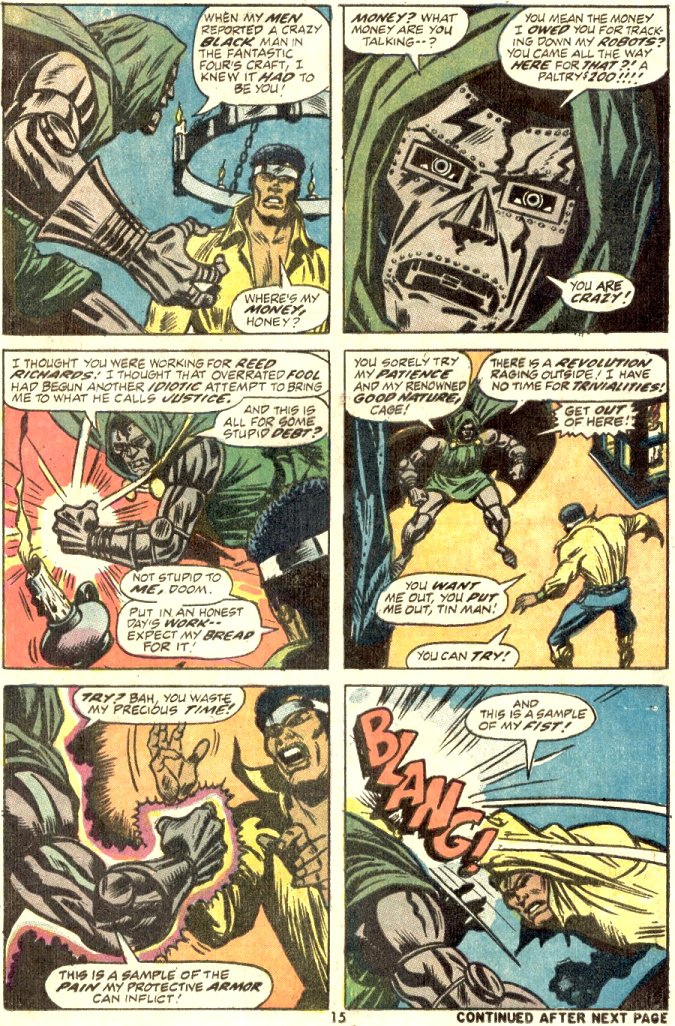
The experiment itself consisted of four stages. Mercifully, none of them involved filling a small test-tube with saliva. I mean, I say small, but the problem with saliva is that it's mainly bubbles, and bubbles simply aren't good enough. I ended up spending what felt like hours spitting into the tube through a straw, using said straw to spear the bubbles, wiping away any spittle that was now running down the outside of the tube (none of you are eating while reading this, are you?), and repeating, again and again and again. I wish I was Luke Cage:

"I need a sample of your saliva."
"This is a sample of my fist!"

Anyway, I digress.

The experiment itself consisted of four stages. First, I was given a booklet containing ten brief stories. All of them contained dialogue, each line of which had a box at the end. The idea was for me to tick the box of any phrase I thought could have upset someone in the story. The doctor supervising me made it very clear that I should "try to consider what I normal person would do". Perhaps my reputation precedes me.

Regardless, despite the advice, I found it a very difficult exercise to complete. Each time I read a story I found it tremendously difficult to not objectively analyse the situation, and from that decide whether anyone in the story had a justifiable case for being upset. I knew that wasn't the point, but I found it very hard to do otherwise. "Should be" and "could be" seemed to get mixed up in my head. Which I thought was odd, though not necessarily out of character. I wonder to what degree my responses would have changed had I known the people the stories referred to ("Senor Spielbergo says Big G looks fat in that dress").

Next, I listened to a bunch of voice actors reading numbers out to me (obviously, as a mathematician, this is my hobby in any case), and I had to decide what the emotion the speaker was communicating. First up was a choice between proud, guilty, bored, interested and neutral. All the way through this one I found it very hard to tell between guilty and bored; I put this down to spending so long listening to children reading numbers back to me, often they put so much effort into making their boredom plain it tends to creep into other tones. This was followed by happy, sad, fearful, angry, and neutral again. Now it was sad and fearful that were difficult to distinguish (ultimately I figured it was all in the speed of delivery), though happy and angry occasionally merged in an odd way, presumably because the actors were American and it's sometimes hard to tell if they're ecstatic or outraged, especially when all you have to go on is "three hundred five!!!"

The final stage of this second part was only slightly different. Same actors, same emotions. This time though I had to relate what the person was feeling, which made more of a difference than I would have expected (which is to say I expected none).

So far, so so-so. The obvious conclusion is that this is an attempt to compare how well people empathise in the abstract with how they do it when confronted by an actual person (or at least their voice). Where things got interesting was in the next stage.

Part the third required me to read twenty-five numbers into a microphone. Each set of five had to be spoken in a different tone. Unsurprisingly these were once again angry, happy, frightened, [3] and sad.

This intrigued me for two reasons. Firstly, was this a test to see how well someone's accuracy of empathy affected their ability to project feeling? Does that work? Is empathy an aid to an acting career? It's an interesting idea. Obviously, it can't be necessary, given that plenty of actors are bastards, but if it's true as a general trend, it would certainly have some fascinating implications (especially for Hollywood; why did they so many of them end up as liberals?).

Secondly, assuming I'm right and there was some attempt going on to measure my level of projection (or spouting a crock, as my old school friends would have it), then how exactly is that measured? What would the scale be? Is this a daring attempt by the psychologists to create the world's first objective scale of acting talent, measured (presumably) in milliOliviers?

The last thing I had to do was read aloud a list of words, all of which were in some sense difficult to pronounce [4]. This too I thought was worthy of consideration, the implication apparently being that empathy is in some sense correlated to literacy. Now that, if true (and, of course, if correlation was eventually strengthened into causation), would be a very interesting thing to know. I am in no sense qualified to offer any explanations as to why it might be the case (and yes I know that hardly ever stops me, shut up), and in fairness this may already be well-known, or indeed already disproved, by the psychological community at large (I realise I'm extrapolating wildly from one experiment). Despite all that, though, I thought it worth mentioning. Certainly the nature of any hypothetical links between empathy, literacy, and show-business in general would make for an interesting discussion.

Update: I mentioned this discussion to A when I last saw her, and she suggested that literacy and empathic ablility may indeed have a connection, because the more literate you are the greater your vocabulary is for the range of emotional states. Thus, the better you become at identifying them. I like this theory.

[1] In fairness, they have started paying me. I became bored of being humanity's benefactor once I realised it didn't improve the chances of anyone sleeping with me.

[2] Partially this was because of the bad memories. I had to turn up at eight in the morning, having been banned from ingesting caffeine. Which as anyone who has ever me me can attest, is roughly equivalent to forcing a codeine addict to go cold turkey and then kicking him in the testicles.

[3] You can have my Oxford comma when you pry it from my cold, dead hands.

[4] By "some sense" I mean that the word "churlish", which I can't imagine too many people slipping up on, was mixed in with words of almost infinite complexity which I can no longer remember. Had I got every one correct I have no doubt that Azathoth would have blazed into being and reduced the city to a nuclear wasteland